Designed for the Average Patient, Failed by the Actual One: The Accessibility Crisis in Medical Supplies
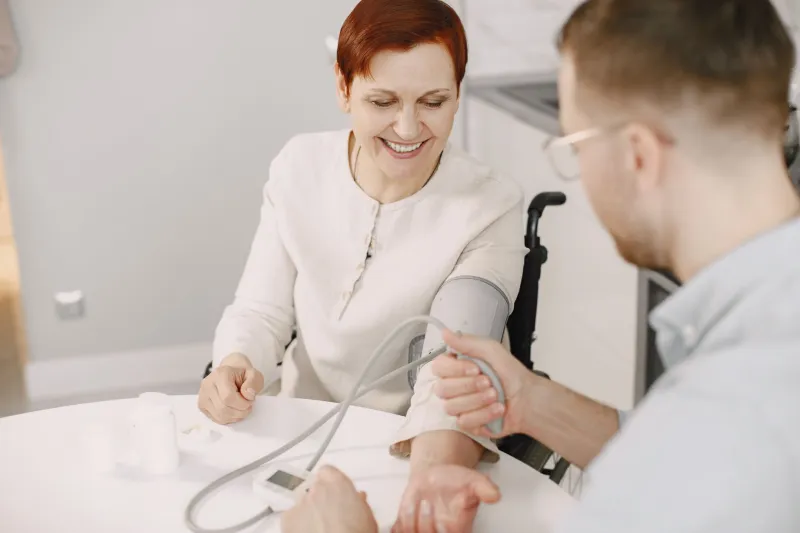
When Margaret Osei, a 67-year-old retired schoolteacher from Columbus, Ohio, was discharged from the hospital after a stroke, she came home with a new regimen: twice-daily blood pressure monitoring, a prescribed compression device for her left leg, and a portable nebulizer for her underlying asthma. What she did not come home with was any equipment she could actually operate independently.
"The blood pressure cuff had these tiny buttons," she recalled. "My right hand doesn't close the way it used to. The nebulizer mask had clips that required two working hands. I sat at my kitchen table and cried."
Margaret's experience is not unusual. It is, in fact, distressingly common — and it points to a structural failure that runs deep through the American medical supply industry.
The Design Assumption That Excludes Millions
The United States is home to approximately 61 million adults living with some form of disability, according to the Centers for Disease Control and Prevention. Mobility limitations, reduced grip strength, vision impairment, cognitive differences, and hearing loss affect patients across every age group and diagnosis category. Yet the overwhelming majority of medical devices and home health supplies are designed around what engineers call the "normative user" — an idealized patient with full sensory capability, bilateral hand function, and unimpaired cognition.
This assumption is not merely an oversight. Industry analysts and disability advocates argue it reflects a deliberate prioritization of manufacturing efficiency and cost reduction over inclusive design. Smaller buttons are cheaper to produce. Standardized packaging reduces unit costs. Detailed visual instruction manuals are less expensive than audio guides or large-print alternatives.
The consequences, however, are borne entirely by patients.
Dr. Alicia Tran, an occupational therapist who works with post-stroke patients at a rehabilitation center in Houston, Texas, describes encountering the same obstacles repeatedly. "I spend a significant portion of my sessions not on therapeutic exercises, but on figuring out workarounds for equipment my patients cannot use as supplied," she said. "That's time and energy that should be going toward recovery."
Specific Barriers, Real Stakes
The barriers disabled patients face with medical supplies fall into several overlapping categories.
Grip and dexterity requirements represent perhaps the most pervasive issue. Insulin pen caps, lancet devices, inhaler actuators, and wound care packaging frequently require a level of fine motor control that patients with rheumatoid arthritis, Parkinson's disease, post-stroke weakness, or multiple sclerosis simply cannot reliably achieve. Child-resistant packaging — mandated by federal law for certain medications — is notoriously difficult for elderly patients and those with hand tremors, creating a painful irony: safety regulations designed to protect children inadvertently endanger the adults who need the medications most.
Visual and cognitive accessibility presents its own challenges. Blood glucose monitors with small display fonts, CPAP machines with multi-step digital interfaces, and wound assessment guides printed in fine-point text on beige backgrounds are functionally inaccessible to patients with low vision or cognitive impairment. A device that delivers accurate readings is clinically useless if the patient cannot read those readings.
Mobility constraints affect the logistics of medical supply use in ways that manufacturers rarely account for. Patients who use wheelchairs, walkers, or who are largely bedbound face significant challenges with equipment designed for standing users — examination tables, infusion stands, and even the placement of port access points on infusion sets.
Sensory and neurological differences add further complexity. Patients with autism spectrum disorder or sensory processing differences may find certain textures, adhesives, or sounds associated with medical equipment acutely distressing — a barrier that is almost never acknowledged in product documentation.
The Industry's Slow Response
Accessibility in medical device design is not an entirely ignored topic. The Americans with Disabilities Act and Section 508 of the Rehabilitation Act establish some obligations for accessibility in federally procured technology, and the FDA has published guidance encouraging manufacturers to consider diverse user populations in device testing. However, these frameworks have significant limitations when applied to the home medical supply market.
For most consumer-grade home health products, inclusive design remains voluntary — and optional tends to mean deprioritized.
Some manufacturers have made meaningful strides. Certain continuous glucose monitoring systems now offer companion apps with voice output and high-contrast display options. A handful of autoinjector manufacturers have introduced grip-assist sleeves and simplified actuation mechanisms. Large-button blood pressure monitors with audio readout have become more widely available.
But these represent islands of progress in a largely unchanged landscape. Patients with complex or multiple disabilities frequently find that even the "accessible" options address only one of their barriers, leaving others unresolved.
The Role of Suppliers in Closing the Gap
While manufacturers bear primary responsibility for accessible design, medical supply distributors occupy a critical — and often underappreciated — position in this ecosystem. A thoughtful supplier does more than stock products; it curates inventory with an eye toward the real diversity of its patient population.
At AristoMedCart, product selection involves consideration of usability across a range of patient capabilities, not merely clinical efficacy. This means evaluating packaging for ease of opening, assessing whether devices offer audio or large-display options, and prioritizing products that come with accessible instructional resources. It also means offering detailed product descriptions that honestly communicate usability characteristics — so that a patient with limited hand strength, or a caregiver sourcing supplies on their behalf, can make genuinely informed purchasing decisions.
Delivery logistics matter here as well. For patients with mobility limitations, the difference between a package left at a curb and one brought to a specific room can determine whether a supply is accessible at all. These are not small considerations — they are, for many patients, the difference between self-sufficiency and dependence.
What Patients and Caregivers Can Do Now
While systemic change in medical device design moves slowly, there are practical steps patients and caregivers can take to navigate the current landscape more effectively.
- Consult an occupational therapist before purchasing home medical equipment. OTs are trained to assess individual functional capacity and recommend adaptive equipment or modifications.
- Request adaptive accessories from your supplier. Grip aids, button hooks, lancet assist devices, and similar tools can transform unusable equipment into manageable tools.
- Prioritize suppliers who provide detailed usability information in product listings — not just clinical specifications.
- Contact manufacturers directly to request accessible formats for instruction manuals. Many companies will provide large-print or audio versions upon request, even when these are not advertised.
- Advocate with your insurer for coverage of adaptive accessories when standard equipment is not independently usable. Documentation from an occupational therapist can support these requests.
A Standard Worth Demanding
Margaret Osei eventually found equipment she could manage — a blood pressure monitor with a large, backlit display and a single-button operation, a nebulizer with magnetic mask clips, and a compression device her home health aide helped her fit. It took three weeks, two telephone consultations with her occupational therapist, and returns of three separate products.
"I shouldn't have had to fight for that," she said simply.
She is right. Accessibility in medical supplies is not a niche concern or a quality-of-life amenity. It is a clinical necessity. When a patient cannot use their prescribed equipment, their care fails — regardless of how sophisticated that equipment may be.
The medical supply industry has an obligation to design for the full spectrum of patients it serves. Until that standard becomes universal, patients deserve suppliers who take the responsibility of product curation seriously — and who recognize that premium care means care that works for everyone.