The Unseen Toll: How Home Medical Equipment Is Quietly Injuring the People Who Care for Others
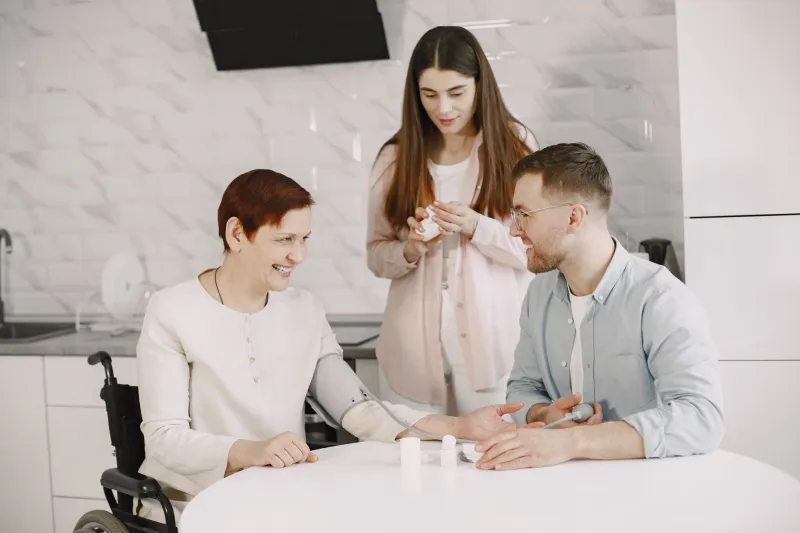
The American healthcare system has a secondary patient population it rarely acknowledges. They do not appear on discharge paperwork. They are not covered by the clinical protocols. They receive no formal training, no occupational health assessment, and no workers' compensation. Yet they lift, transfer, reposition, and manage complex medical equipment for hours each day—often for years.
They are informal caregivers: the 53 million Americans, according to the National Alliance for Caregiving, who provide unpaid assistance to a family member or friend. And the medical supply industry, despite serving them every day, has been slow to reckon with the physical harm it may be enabling.
A Population Hiding in the Data
Musculoskeletal injury rates among professional healthcare workers are well-documented and widely discussed. The Bureau of Labor Statistics consistently ranks nursing home and home health aides among the occupations with the highest rates of work-related injuries, with back strain, shoulder injury, and repetitive stress disorders dominating the data.
What is far less visible is the parallel injury burden carried by informal caregivers performing the same physical tasks—patient transfers, equipment repositioning, wound care—without the training, body mechanics instruction, or ergonomically appropriate equipment that healthcare employers are legally required to provide.
A 2021 study published in The Gerontologist found that more than 40% of informal caregivers reported chronic musculoskeletal pain they attributed directly to caregiving activities. A significant subset reported injuries serious enough to require their own medical attention, creating a secondary patient crisis that the healthcare system had generated but was not tracking.
The Equipment Was Not Designed With Them in Mind
Medical equipment designed for home use is evaluated for patient safety, clinical efficacy, and, increasingly, patient ease of use. Caregiver ergonomics—the physical demands placed on the person operating or managing the equipment—remain largely outside the formal evaluation framework.
Consider a standard home oxygen concentrator. The device itself may weigh between 15 and 20 pounds. Portable oxygen cylinders, depending on size, can weigh considerably more. An elderly spouse managing a partner's COPD may be moving these cylinders multiple times daily—lifting, repositioning, transporting between rooms—with no instruction about safe handling technique and no alternative equipment configuration suggested by the discharging hospital or home health agency.
The same dynamic plays out across virtually every category of home medical equipment. Standard hospital beds adjusted for patient positioning require caregiver operation of controls that, depending on bed placement and room configuration, may involve sustained awkward posture. Wound care supply trays are frequently positioned at heights that require caregivers to work in sustained forward flexion. Manual wheelchairs, when pushed over thresholds or lifted into vehicles, impose significant shoulder and lumbar loading on caregivers who may themselves be older adults with their own musculoskeletal vulnerabilities.
Three Scenarios That Illustrate the Problem
The Spousal Caregiver: A 71-year-old woman managing her husband's post-stroke rehabilitation at home performs assisted standing transfers six to eight times daily using a gait belt and her own upper body strength. Without a properly fitted mechanical lift or transfer aid—equipment that may not have been prescribed or delivered—she is performing the functional equivalent of a professional patient transfer without the training or physical conditioning of a nursing aide. Rotator cuff injuries in this population are not uncommon. They are also rarely attributed to caregiving in clinical records.
The Adult Child Caregiver: A 48-year-old man managing his mother's wound care following a diabetic foot ulcer debridement performs daily dressing changes using a supply kit delivered with minimal instruction. The wound care table is her bedside table—too low for comfortable standing work, too high for seated work—and he spends 20 to 30 minutes daily in sustained lumbar flexion performing precise manual tasks. Lower back pain develops over weeks. He attributes it to his desk job.
The Elderly Sibling Caregiver: A 76-year-old woman managing her brother's portable oxygen equipment during outings lifts and loads a portable oxygen cylinder into a vehicle trunk multiple times weekly. No one assessed her own physical capacity at the time the equipment was prescribed. No one suggested a rolling carrier or a lighter liquid oxygen system. She sustains a lumbar compression event six months into the arrangement. Her brother's care is disrupted. She requires her own medical intervention.
These are not edge cases. They are the structural outcome of a home healthcare system that treats the caregiver as an operational afterthought.
What Genuinely Caregiver-Conscious Equipment Selection Looks Like
The solution is not simply to purchase more expensive equipment. It is to include caregiver physical capacity and ergonomic safety as explicit selection criteria when choosing home medical supplies and equipment.
For oxygen management, this means evaluating portable oxygen concentrators against the caregiver's ability to manage their weight and transport logistics—not just the patient's oxygen requirements. Lightweight portable concentrators and liquid oxygen systems exist; they are not always the default option presented by durable medical equipment suppliers.
For patient transfer and mobility, this means treating mechanical lift equipment and transfer boards as caregiver-protective devices, not only patient-protective ones. A Hoyer lift or ceiling track system is typically framed in clinical settings as a fall-prevention tool for patients. It is equally a musculoskeletal injury prevention tool for the person doing the transferring.
For wound care, this means paying attention to supply organization and workspace setup. Adjustable-height supply carts, adequate lighting, and supply organization that minimizes reaching and bending are not luxuries. They are the difference between a sustainable care routine and one that gradually disables the person providing it.
The Role of the Medical Supply Relationship
Informed medical supply providers have an opportunity—and arguably a responsibility—to surface these considerations at the point of equipment selection. When a patient is being discharged with wound care supplies, oxygen equipment, or mobility aids, the questions asked should include: Who will be managing this equipment? What is their physical capacity? What setup will minimize their injury risk while maintaining the patient's care quality?
At AristoMedCart, our product information and customer support resources are designed to serve the full household—not just the patient named on the prescription. When caregivers contact us with questions about equipment configuration, weight management, or alternative product options, those conversations matter as much as any clinical inquiry.
Protecting the Caregiver Is Protecting the Patient
There is a practical argument for caregiver safety that extends beyond simple compassion: when informal caregivers are injured, patient care deteriorates. Hospital readmissions increase. Formal home health services are activated at significantly higher cost. In the worst cases, patients are transitioned to institutional care settings not because their condition warranted it, but because the person caring for them was no longer physically able to do so.
The healthcare system cannot continue to externalize the cost of caregiver injury onto the families it relies upon to deliver the majority of home-based care in this country. Better equipment selection, clearer ergonomic guidance, and a medical supply industry that takes caregiver safety seriously as a design criterion are not radical proposals. They are the minimum standard a functioning home healthcare ecosystem requires.