Lost in Translation: When Your Diabetes Devices Stop Communicating With Each Other
A Common Scenario With Uncommon Consequences
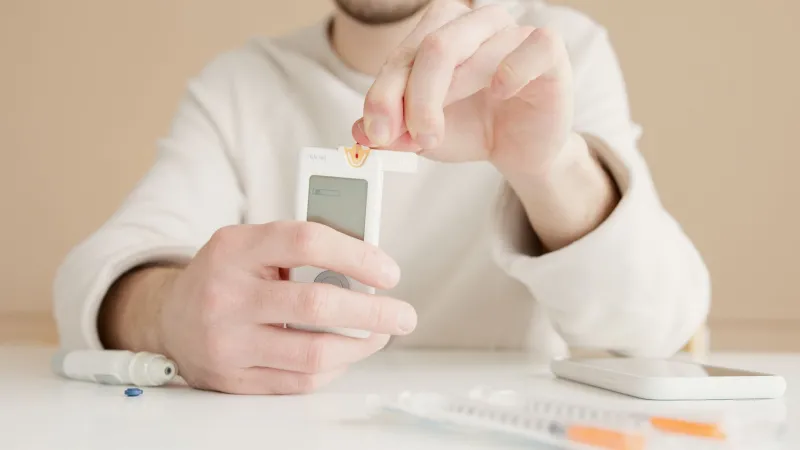
Imagine completing your morning blood glucose reading — 187 mg/dL, higher than your target range — and then reaching for your insulin pen to dose accordingly. Two separate devices. Two separate manufacturers. Two separate data ecosystems. You manually calculate your correction dose, log the reading in one app, and administer the insulin through another. If any step in that chain is misremembered, mistyped, or simply skipped because the process is too cumbersome, the downstream effects can be immediate and serious.
This is not a rare edge case. It is the daily reality for a significant portion of the estimated 37 million Americans living with diabetes. Despite remarkable advances in both insulin delivery technology and continuous glucose monitoring, the devices patients rely on most frequently remain stubbornly siloed — and the burden of bridging that gap falls almost entirely on the patient.
Why Devices from Different Manufacturers Rarely Speak the Same Language
The interoperability problem in diabetes care is rooted in a combination of technical standards, regulatory frameworks, and market incentives that have historically worked against integration.
From a technical standpoint, medical devices communicate using a variety of proprietary data protocols. A blood glucose meter from one manufacturer may store readings in a format that is entirely incompatible with the companion application of an insulin pen from another. Even when both devices offer Bluetooth connectivity, the data structures they produce — how a glucose value is timestamped, labeled, and transmitted — may differ enough that automatic synchronization is impossible without a third-party intermediary.
The regulatory dimension adds another layer of complexity. The U.S. Food and Drug Administration classifies insulin delivery devices and glucose monitors under different device categories, each subject to its own clearance pathway. Manufacturers seeking to build integrated systems must navigate additional regulatory scrutiny for what the FDA terms "combination products," a process that increases both cost and development time. For many companies, the calculus simply does not favor pursuing seamless cross-brand integration when a closed, proprietary ecosystem is easier to certify and more commercially defensible.
Finally, competitive dynamics discourage voluntary collaboration. A glucose monitor manufacturer that builds deep interoperability with a rival's insulin pen is, in effect, reducing the switching cost for its own customers. The business incentive to keep users within a single brand's product family is significant — even when patient outcomes would benefit from greater openness.
The Real Cost of the Data Gap
The practical consequences of this fragmentation are well-documented, if underappreciated in mainstream healthcare conversations.
Manual data transcription is one of the most immediate risks. When patients must manually record glucose readings and then reference those numbers to calculate insulin doses, transcription errors become a genuine safety concern. A misread digit — 178 entered as 187, for example — can alter a correction dose in ways that produce hypoglycemia or sustained hyperglycemia. Research has consistently demonstrated that the more steps introduced between a measurement and a clinical decision, the greater the opportunity for error.
Beyond acute errors, there is the problem of incomplete data. Many patients, particularly those managing demanding work or family schedules, simply do not maintain the manual logs their care teams request. When a physician reviews three months of glucose data and finds significant gaps, the ability to identify patterns, adjust medications, or recognize emerging complications is substantially compromised. The device ecosystem's failure to automate data capture is a direct contributor to those gaps.
There is also the psychological toll. Managing a chronic condition is demanding under the best circumstances. When patients must serve as the human interface between incompatible devices — manually reconciling data, maintaining multiple apps, and troubleshooting connectivity failures — the cognitive burden compounds the physical one. Clinicians who work in diabetes care frequently cite "device fatigue" as a genuine barrier to patient adherence.
Navigating the Current Landscape: What Patients Can Do Now
While systemic change in device interoperability will require regulatory evolution and industry cooperation, there are practical strategies patients can employ today to reduce the risks associated with fragmented device ecosystems.
Evaluate compatibility before you purchase. When selecting a new glucose monitor or insulin delivery device, ask your endocrinologist or diabetes care specialist which pairings are known to work well together. Some manufacturers have established formal partnerships that enable data sharing between specific device models. Researching these relationships before committing to a device can prevent months of frustration.
Explore integrated diabetes management platforms. Several third-party applications, including Tidepool and Glooko, are specifically designed to aggregate data from multiple diabetes devices regardless of manufacturer. These platforms can serve as a neutral data layer, consolidating readings from your glucose monitor, insulin pen, and continuous glucose monitor into a single, reviewable record. Many are compatible with Apple Health and Google Fit, further centralizing your health data.
Consider closed-loop or integrated systems where clinically appropriate. For patients who meet the clinical criteria, FDA-cleared automated insulin delivery systems — sometimes called "artificial pancreas" systems — integrate a continuous glucose monitor with an insulin pump and an algorithm that adjusts delivery automatically. These systems represent the current gold standard for device integration in diabetes care and eliminate many of the manual steps that introduce error.
Maintain a simple, consistent paper log as a backup. Technology solutions are valuable, but they are not infallible. A brief daily log — glucose reading, insulin dose, time administered — requires minimal effort and provides a reliable reference if digital systems fail or data is lost.
Communicate your device ecosystem to every member of your care team. Your primary care physician, endocrinologist, and pharmacist should each have a clear picture of every device and medication you are using. Discrepancies in dosing or monitoring that might appear clinically significant can often be explained by device incompatibilities — but only if your providers know what tools you are working with.
The Broader Responsibility: Industry and Regulation
It would be incomplete to discuss this issue without acknowledging that the burden of managing device incompatibility should not rest primarily on patients. Healthcare providers, device manufacturers, and regulators each bear a share of the responsibility for the current state of affairs.
The FDA has taken incremental steps toward promoting interoperability, including the development of standards for interoperable automated glycemic control. Advocacy organizations representing patients with diabetes have been increasingly vocal about the need for open data standards that allow devices from competing manufacturers to share information safely and reliably. Progress is occurring — but it is measured in years, not months.
In the meantime, patients who are proactive about understanding their device ecosystem, asking informed questions of their care teams, and selecting supplies with compatibility in mind are better positioned to manage the gap.
Choosing Your Supplies With Integration in Mind
At AristoMedCart, we recognize that the decision to purchase a glucose monitor or insulin delivery device is rarely made in isolation. It is made in the context of an existing medication regimen, a specific care team's recommendations, and the practical realities of daily life. Our product listings include compatibility information where available, and our customer support team is available to help patients identify supply combinations that work together effectively.
The right medical supplies are not simply the ones with the most features — they are the ones that fit coherently into your overall care plan. In diabetes management, that coherence between devices and medications is not a luxury. It is a clinical necessity.