Out-of-Pocket, Ahead of the Curve: Why Self-Funding Premium Home Monitoring Devices Often Pays for Itself
For millions of Americans managing chronic conditions at home, the phrase "not covered by your plan" has become one of the most consequential sentences in healthcare. When an insurer declines to reimburse a medical-grade blood pressure monitor, a clinical-accuracy pulse oximeter, or a connected weight management scale, patients are typically steered toward the cheapest covered alternative—or left without a device entirely. What rarely enters that conversation is the downstream cost of that decision.
The evidence increasingly suggests that the gap between covered equipment and clinically optimal equipment is not cosmetic. It is measurable, consequential, and in many cases, financially correctable by the patient who understands the full calculation.
Why Insurance Coverage Trails Clinical Evidence
Insurance reimbursement decisions are not primarily driven by clinical efficacy. They are driven by cost modeling, actuarial projections, and coverage categories established years or even decades ago. The Centers for Medicare & Medicaid Services, for example, classifies home monitoring devices under Durable Medical Equipment criteria that have not kept pace with the rapid advancement of consumer-grade medical technology.
The practical result is that a blood pressure monitor approved for coverage may meet the minimum threshold for accuracy established in 2008, while a currently available medical-grade device validated against the most recent European Society of Hypertension protocols offers substantially tighter measurement consistency. Both qualify as "blood pressure monitors." Only one reflects where the science currently stands.
This institutional lag is not unique to any single insurer. It is a structural feature of how coverage policy is written and updated—slowly, conservatively, and with primary attention to cost containment rather than outcome optimization.
The Blood Pressure Monitor Gap: A Case Study in Measurement Precision
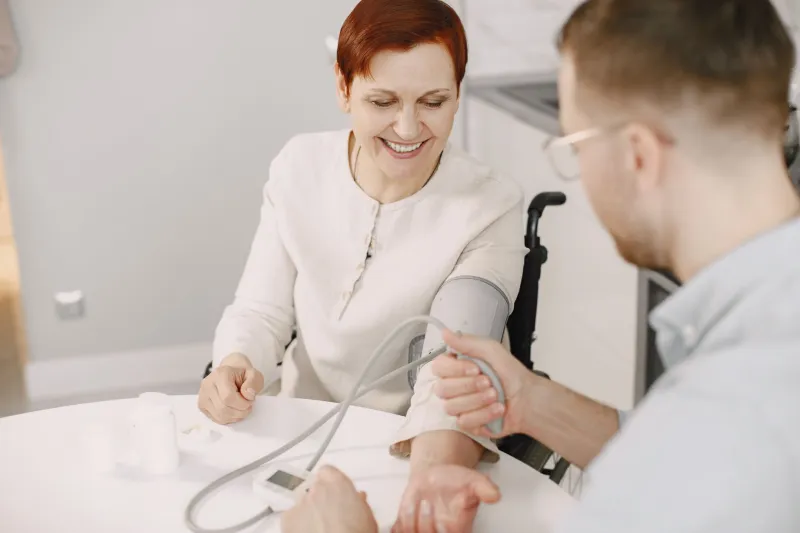
Consider a patient managing stage 2 hypertension. Their physician has recommended home monitoring to complement clinic visits, and their insurer will cover a basic upper-arm cuff device. That device, under ideal conditions, may carry a margin of error of plus or minus 5 mmHg. A validated medical-grade monitor, available through reputable medical supply platforms, may reduce that margin to plus or minus 2 mmHg or less.
For a patient whose medication is titrated based on home readings, a 5 mmHg variance is not a rounding error. It is the difference between an accurate picture of cardiovascular status and a systematically distorted one. Studies published in peer-reviewed journals, including research in Hypertension and the Journal of the American Heart Association, have documented that poor measurement accuracy at home contributes directly to suboptimal medication adjustments and avoidable hospitalizations.
The average cost of a hypertension-related hospitalization in the United States exceeds $15,000. A premium validated blood pressure monitor typically costs between $80 and $180 out of pocket. The arithmetic is not subtle.
Pulse Oximetry: When Consumer-Grade Accuracy Becomes a Clinical Liability
The COVID-19 pandemic brought pulse oximetry into millions of American homes—and simultaneously exposed a serious accuracy problem. Research from the University of Michigan and others demonstrated that lower-cost oximeters showed significantly higher error rates in patients with darker skin tones, a disparity that contributed to delayed recognition of deteriorating respiratory status.
Medical-grade oximeters, particularly those using multi-wavelength technology or validated for diverse skin tones, carry a substantially higher price point than the devices insurers typically cover or that are commonly sold in pharmacy aisles. For patients with COPD, heart failure, or any condition requiring reliable oxygen saturation monitoring, the clinical case for the upgraded device is well-supported.
For a patient whose oxygen therapy is adjusted based on home saturation readings, measurement inaccuracy is not a theoretical concern. It is an active clinical variable with real consequences for respiratory function and quality of life.
The Connected Weight Scale and Heart Failure Management
Cardiac care protocols for heart failure management frequently include daily weight monitoring as an early warning system for fluid retention—a leading indicator of decompensation that, if caught early, can be managed with medication adjustment rather than emergency intervention. Basic covered scales accomplish the core function. Medical-grade connected scales, however, provide time-stamped data transmission to care teams, trend analysis, and automated alerts when weight gain exceeds threshold parameters.
A 2022 analysis of remote patient monitoring programs found that patients using connected weight and vital sign devices experienced statistically significant reductions in 30-day readmission rates compared to those using standard home monitoring. Given that a single heart failure readmission costs the healthcare system—and frequently the patient, through co-pays and deductibles—several thousand dollars, the ROI calculation for a $200 connected scale deserves serious attention.
Building the Patient-Side ROI Calculation
Before dismissing a premium monitoring device as an unaffordable luxury, patients should work through a structured financial analysis:
Step 1: Identify the coverage floor. What will your insurer provide, and at what accuracy or functionality level?
Step 2: Quantify the clinical gap. Consult your physician or care team about the specific limitations of the covered device relative to available alternatives. Ask for documentation of accuracy specifications.
Step 3: Estimate the downstream cost of inaccurate monitoring. What is the likelihood, given your specific condition, that measurement error leads to a medication adjustment error, an avoidable clinic visit, or an emergency department encounter?
Step 4: Factor in tax-advantaged purchasing. Many premium medical monitoring devices are eligible for purchase through Health Savings Accounts (HSAs) or Flexible Spending Accounts (FSAs), effectively reducing the out-of-pocket cost by your marginal tax rate. A $150 device purchased through an HSA may cost a patient in the 22% bracket an effective $117.
Step 5: Explore manufacturer assistance programs. Several medical device manufacturers offer patient assistance programs, rebates, or extended warranties that reduce the effective acquisition cost.
What to Look for When Purchasing Medical-Grade Monitoring Equipment
Not every expensive device is a better device. Patients investing in premium home monitoring tools should prioritize:
- Clinical validation: Look for devices validated against recognized protocols (AAMI, BHS, or ESH standards for blood pressure monitors; FDA clearance for pulse oximeters).
- Connectivity and data sharing: Devices that integrate with your care team's patient portal or electronic health record system multiply their value significantly.
- Supplier credibility: Purchase from established, verified medical supply sources that carry appropriate licensing and can provide documentation of device provenance.
At AristoMedCart, every monitoring device available on our platform is sourced from manufacturers meeting current regulatory standards, with product specifications clearly disclosed so patients and care providers can make informed comparisons rather than guessing at quality from packaging alone.
The Conversation Worth Having With Your Physician
Many patients never raise the question of device quality with their physicians because they assume the covered option is adequate. Physicians, for their part, often do not initiate the conversation because they assume cost is prohibitive. The result is a mutual silence that defaults to the insurance-approved minimum.
Bringing specific device comparisons—accuracy specifications, connectivity features, clinical validation data—to a physician visit changes that dynamic. In some cases, a physician's documented letter of medical necessity can support an appeal for enhanced coverage. In others, it simply equips the patient to make a genuinely informed choice about where their healthcare dollars produce the greatest return.
The insurance system will not optimize your care for you. But with the right information and the right equipment, you can.