Shelf Life, Real Consequences: What Expired Medical Supplies Are Actually Doing to Patient Safety
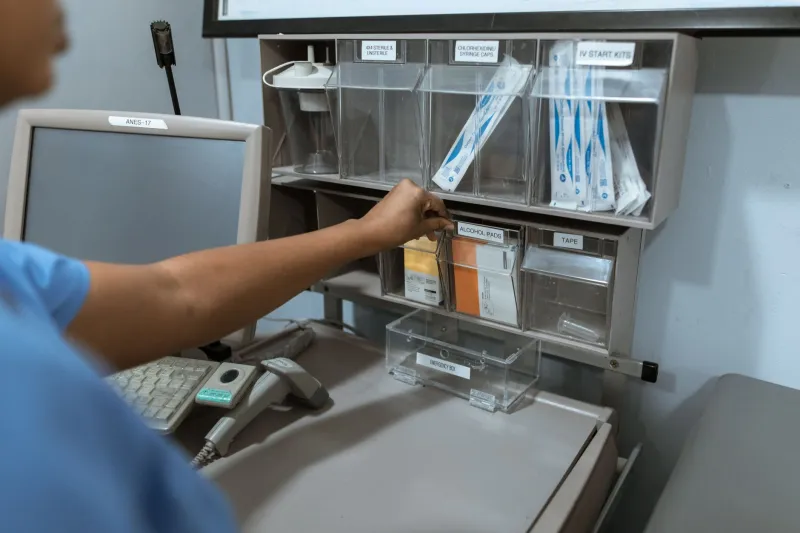
When a nurse reaches for a glucose test strip or a wound care dressing, the expiration date printed on the packaging may seem like a formality — a bureaucratic timestamp more relevant to liability than clinical reality. That assumption, however, has cost patients dearly. Across the United States, healthcare providers are beginning to reckon with the compounding risks that outdated medical supplies introduce into otherwise sound care protocols.
The issue is not marginal. A 2019 report from the Food and Drug Administration flagged expired diagnostic reagents and single-use devices as a recurring source of adverse event reports, particularly in outpatient and home care settings where formal inventory oversight is less rigorous than in hospital environments. Understanding why expiration dates carry genuine clinical weight — and how facilities can systematically prevent lapses — has become an essential dimension of modern healthcare quality management.
Why Expiration Dates Are Not Suggestions
Manufacturers determine shelf-life windows through stability testing, a process that evaluates how a product's chemical composition, structural integrity, and sterility hold up over time under defined storage conditions. These are not arbitrary numbers. A bandage adhesive that degrades past its expiration date may fail to maintain wound closure. A lancet whose sterile barrier has been compromised introduces infection risk. Diagnostic test strips that have undergone chemical breakdown can produce false readings, leading clinicians to make treatment decisions based on inaccurate data.
Perhaps the most clinically significant category involves sterile, single-use devices. The sterility of a catheter, syringe, or IV access needle is guaranteed only through the expiration date. Once that date passes, the manufacturer can no longer certify that the packaging has maintained its barrier function. In a home care setting, where a patient may be managing a chronic condition without direct clinical supervision, this distinction can mean the difference between a routine procedure and a serious infection.
Consider the documented experience of a regional dialysis center in Ohio that, following a supply chain disruption in 2021, extended the use of certain dialysis tubing sets beyond their certified dates. Several patients subsequently developed elevated inflammation markers consistent with compromised sterility. The center's incident report, later reviewed during a state inspection, identified expired supplies as a contributing factor — a finding that triggered a comprehensive overhaul of their inventory protocols.
The Storage Variable: When Conditions Accelerate Degradation
Expiration dates assume adherence to manufacturer-specified storage parameters. Temperature, humidity, and light exposure all influence how quickly a medical product degrades. A wound dressing stored in a climate-controlled supply room behaves very differently from one kept in a patient's bathroom cabinet, where humidity fluctuates with every shower.
This reality is particularly relevant for home healthcare patients managing supplies independently. Insulin, for instance, is frequently stored incorrectly by patients who are unaware that heat exposure can render it ineffective well before the printed expiration date. Similarly, latex gloves stored near cleaning chemicals or in direct sunlight can develop micro-tears invisible to the naked eye, eliminating their barrier protection entirely.
Healthcare providers who conduct home visits increasingly report discovering compromised supplies during patient assessments — a finding that underscores the need for patient education alongside clinical supply management. Proper storage guidance should accompany every medical product a patient receives, whether from a clinic, a pharmacy, or a direct-to-door delivery service.
Inventory Rotation: The FIFO Principle in Practice
In hospital and clinic settings, the standard approach to supply management follows a First In, First Out (FIFO) methodology — the same logic that governs grocery store stocking. Older inventory is positioned for use before newer stock, systematically reducing the probability that any item approaches its expiration date before being deployed.
Implementing FIFO in practice requires more than good intentions. It demands physical organization systems, regular auditing cycles, and staff training that reinforces the protocol consistently. Many smaller healthcare practices and home health agencies lack the infrastructure to maintain these standards rigorously, particularly when supply orders arrive in bulk and storage space is limited.
Digital inventory tracking has emerged as a meaningful solution for mid-sized facilities. Systems that log lot numbers and expiration dates at the point of receipt allow administrators to generate automated alerts when products approach critical thresholds — giving procurement teams adequate lead time to reorder without sitting on excess stock that may eventually expire unused.
How Reliable Delivery Cycles Reduce Waste and Risk
One of the structural contributors to expired supply accumulation is the tendency to over-order as a buffer against supply chain uncertainty. When delivery timelines are unpredictable, facilities stock heavily to avoid shortfalls — and that excess inventory often ages out before it can be used.
At AristoMedCart, the delivery model is built around reliability and consistency precisely because predictable replenishment cycles allow healthcare facilities and individual patients to order in quantities calibrated to actual usage rather than anxiety-driven surplus. When providers can count on a restocking schedule, they are less likely to accumulate redundant inventory that ultimately expires on the shelf.
For home healthcare patients, this principle translates directly into fresher supplies arriving at the point of care. Rather than purchasing large quantities from a single order that then sit in a cabinet for months, patients can establish recurring delivery cadences that align with their consumption rates — ensuring that the supplies in use are consistently within their certified shelf-life window.
Practical Steps for Providers and Patients
For healthcare facilities seeking to tighten their expiration management protocols, several actionable measures are worth implementing immediately:
- Conduct a full inventory audit at least quarterly, flagging any items within 90 days of expiration for priority use or return.
- Establish a designated near-expiry zone in your supply storage area so staff can identify and prioritize these items without additional searching.
- Document lot numbers and expiration dates at the point of receipt, not just at the point of use.
- Educate patients receiving home supplies on correct storage conditions and encourage them to check dates before each use.
- Partner with supply vendors who provide transparent product dating and support returns or exchanges for near-expiry stock.
For individual patients, the habit of checking expiration dates before use is a straightforward but meaningful safeguard. If a product looks or smells different from its expected presentation, it should not be used regardless of whether the expiration date has technically passed — physical signs of degradation can precede the printed date when storage conditions have been suboptimal.
The Broader Quality Imperative
Expiration date compliance is ultimately an expression of a broader commitment to care quality. Medical supplies are not commodities in the conventional sense; they are instruments of clinical intervention, and their performance directly affects patient outcomes. The expiration date is the manufacturer's certification that the product will perform as intended — and using supplies beyond that boundary is, in effect, using an uncertified tool in a clinical context.
As healthcare delivery continues to shift toward home and outpatient settings, the responsibility for maintaining supply integrity is increasingly distributed across a wider range of stakeholders — patients, caregivers, and home health providers alongside traditional clinical facilities. Equipping all of these parties with the knowledge and supply chain infrastructure to keep their inventories current is not a logistical nicety. It is a patient safety imperative.