Penny-Wise, Patient-Foolish: The True Price of Substandard Medical Equipment

In an era of rising healthcare costs, the temptation to cut corners on medical supplies is understandable. Hospital procurement departments face relentless budget pressure. Individual patients managing chronic conditions at home search for any savings they can find. Online marketplaces now offer pulse oximeters, blood pressure cuffs, wound care kits, and infusion supplies at prices that seem almost too good to be true.
Often, they are.
A growing body of evidence — drawn from FDA enforcement records, peer-reviewed clinical research, and firsthand accounts from frontline healthcare professionals — paints a troubling picture of what happens when quality is sacrificed at the altar of affordability.
The Regulatory Landscape Most Consumers Never See
The United States Food and Drug Administration classifies medical devices into three tiers based on risk. Class I devices, such as bandages, face minimal regulatory oversight. Class II and Class III devices — which include blood glucose monitors, infusion pumps, and cardiac monitors — require demonstrated performance standards before they may legally be sold in the US market.
Yet enforcement gaps persist. The FDA's MedWatch database, which tracks voluntary and mandatory adverse event reports, consistently logs thousands of complaints annually tied to devices that either circumvented proper clearance pathways or were manufactured to standards far below their approved specifications. Between 2020 and 2023, the agency issued more than 140 import alerts targeting medical device manufacturers — many of them overseas suppliers feeding the discount marketplace ecosystem.
"We see it repeatedly," said one registered nurse at a mid-sized community hospital in Ohio who asked to remain anonymous due to institutional policy. "A supply coordinator switches to a cheaper vendor for something like a blood pressure cuff, and within a few weeks our nursing staff is flagging readings that don't match the patient's clinical presentation. It creates unnecessary downstream testing, additional physician time, and in some cases, delayed treatment."
When 'Good Enough' Is Anything But
Consider the case of pulse oximetry — a technology that became a household term during the COVID-19 pandemic. Studies published in journals including JAMA Internal Medicine and The New England Journal of Medicine documented significant accuracy disparities among consumer-grade oximeters, particularly in patients with darker skin tones. Devices that appeared FDA-cleared but were manufactured without rigorous calibration protocols routinely overestimated blood oxygen saturation, sometimes by as many as four percentage points. For a patient hovering near a clinically significant threshold, that margin is not trivial — it is potentially life-altering.
Similar concerns extend to wound care products. Bargain-priced surgical dressings sourced from unverified distributors have been found to contain non-sterile materials, inadequate barrier properties, and adhesive compounds that cause skin trauma upon removal. For a patient recovering from surgery or managing a diabetic ulcer, such failures translate directly into extended healing timelines, increased infection risk, and additional medical visits — costs that rapidly eclipse whatever was saved at the point of purchase.
The Hidden Arithmetic of Cheap Supplies
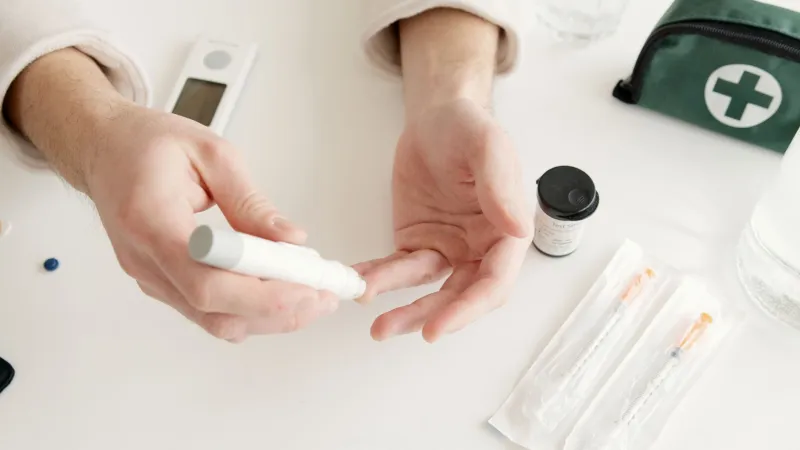
Healthcare economists have a term for this phenomenon: the "false economy." A single substandard blood glucose meter that produces readings skewed by even 15 percent can lead a diabetic patient to under- or over-medicate, triggering hypoglycemic episodes or long-term complications that require emergency intervention. The average cost of an emergency department visit in the United States now exceeds $2,000. The "savings" from a $12 meter versus a $45 clinically validated alternative evaporate instantly.
For healthcare facilities, the calculus is similarly stark. Liability exposure from device-related adverse events, the administrative burden of managing supply recalls, and the reputational damage that follows a preventable patient harm incident all carry financial consequences that dwarf procurement savings.
A Practical Checklist: How to Identify Substandard Medical Supplies
Whether you are a procurement officer for a multi-site clinic or an individual managing a loved one's care at home, the following criteria can help you distinguish quality products from dangerous impostors.
For Healthcare Facilities:
- Verify that all devices carry legitimate FDA 510(k) clearance or PMA approval, and cross-reference the FDA's publicly searchable device database.
- Request and review the manufacturer's ISO 13485 certification — the international quality management standard for medical device production.
- Insist on documented lot traceability and a clear recall notification protocol from your distributor.
- Conduct periodic performance audits comparing device readings against a known clinical standard.
- Evaluate your distributor's supply chain transparency. Reputable suppliers can identify the country of origin and manufacturing facility for every product they carry.
For Individual Patients and Caregivers:
- Purchase monitoring devices from established medical supply retailers rather than general consumer marketplaces where counterfeit and gray-market products proliferate.
- Look for devices that specify clinical validation studies in their product documentation — not just "FDA registered," which carries far less weight than FDA clearance.
- Consult your physician or pharmacist before purchasing any diagnostic device. Many will have specific brand recommendations based on clinical reliability.
- Be skeptical of pricing that falls dramatically below the market norm for a given product category.
- Review the manufacturer's warranty and customer support infrastructure. Reputable companies stand behind their products.
The Case for Premium: An Investment, Not an Expense
At AristoMedCart, the procurement philosophy begins and ends with one question: would we trust this product for our own families? Every item offered through our platform is sourced from manufacturers with verifiable regulatory compliance histories and evaluated against published clinical performance benchmarks.
This is not marketing language — it is operational policy. The premium medical supplies available through AristoMedCart reflect the genuine cost of responsible manufacturing: proper raw materials, validated production processes, rigorous quality control, and the regulatory diligence that protects both the patient using the device and the provider recommending it.
Healthcare has never been a domain where the lowest bid serves the highest good. As supply chains grow more complex and online marketplaces make it easier than ever to purchase unvetted equipment, the responsibility to make informed, quality-driven decisions falls on all of us — institutions and individuals alike.
The next time a bargain price catches your eye, ask yourself what is not included in that number. The answer may be the very thing that matters most.